Flint cultural institutions face setbacks after federal funding pulled
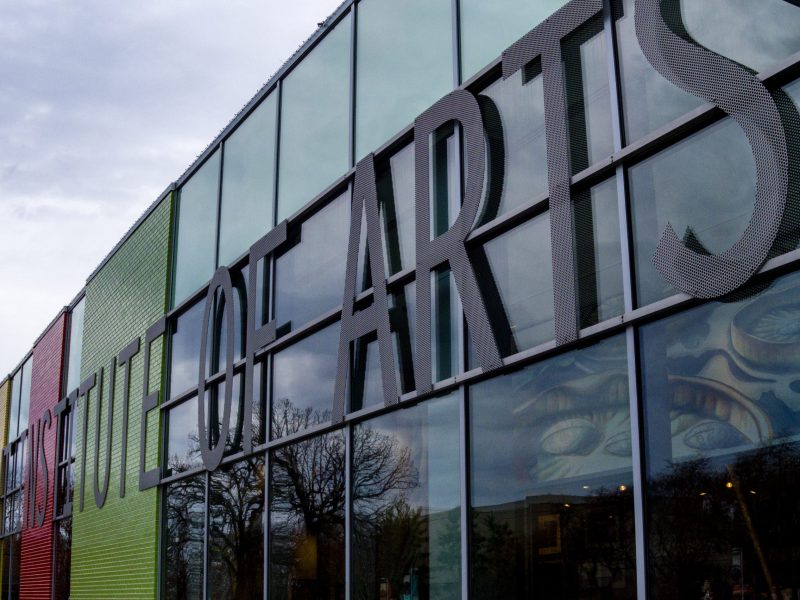
FLINT, Mich. — On April 2, 2025, Flint Institute of Arts Director Tracee Glab received unexpected news: the federal government was revoking $150,000 in National Endowment for the Humanities (NEH) funding—effective retroactively as of April 1.
“There was no forewarning,” said Glab. “We even asked the NEH, are we in jeopardy? And we got repeated assurances from their staff that everything was fine, just keep proceeding along with your project.”
The project in question involves replacing the museum’s aging humidifiers, which are more than 25 years old. Estimated at $500,000, the upgrade is vital not only for visitor comfort but also for preserving the museum’s art collection. The remaining funds were matched by the museum through contributions from generous donors and patrons.
Federal grants typically reimburse institutions after expenses are incurred. With the NEH pulling out, the museum is now left holding the bill.
As a result, the FIA’s Spring Appeal fundraiser will shift focus from exhibitions to covering the cost of the humidifiers.
Glab emphasized how vital federal support is for arts institutions, especially when it comes to less-visible infrastructure needs.
“People like writing checks for things like K–12 programs, but maybe not so much a humidifier,” she said. “There’s not a human element to it, although it’s necessary in order for us to be open.”
The FIA isn’t alone. Michigan Humanities—one of 56 state councils supported by the NEH—was also impacted. All programs and grants were abruptly terminated, including the Great Michigan Reads initiative.
Since 2007, the Gloria Coles Flint Public Library has participated in Great Michigan Reads, using it to spotlight regional authors and foster cross-generational engagement.
Library Executive Director Taliah Abdullah expressed shock and heartbreak at the news.
“It’s heartbreaking to receive this on the heels of knowing that there are so many changes going on with the Institute of Museum and Library Services,” said Abdullah. “[The additional cuts] will have a significant impact on what cultural institutions are able to do.”
Great Michigan Reads allowed the library to spotlight local and regional authors and writers Flint residents might not otherwise encounter. The program also encourages intergenerational connections.
“It’s an opportunity for the community to read, meet and engage with diverse voices,” Abdullah said. “It also gives our staff the chance to support and collaborate with authors whose values align with what we’re trying to do here at the library.”
Last year’s selection, “Firekeeper’s Daughter” by Chippewa author Angeline Boulley, exemplified that impact, sparking meaningful conversations between teens and older adults.
“It really spoke to the library as a community hub of bringing people together. And of course, the topic of Native American history and century Native American characters. And so that’s not something that we often hear about or engage with here in the city of Flint.”
She emphasized the library’s importance as a space where people can learn about and connect with cultures and communities they might not otherwise encounter.
On April 4, Michigan Attorney General Dana Nessel joined a coalition of 20 other attorneys general in suing the Trump administration to stop the dismantling of three federal agencies that provide critical services and funding for public libraries, museums, workers, and minority-owned businesses across the country.
For Abdullah, the news was encouraging, especially given the uncertainty libraries and museums have been facing.
Libraries and museums have been asking: Should we spend money? How much do we even have to spend, when we don’t know what the next fiscal year will bring?
Abdullah expressed concern for colleagues who have already lost their jobs. Most recently, the Institute of Museum and Library Services, a federal agency that funds libraries and museums, terminated all grants and placed its entire staff on administrative leave.
She described the library’s loss of NEH funding as “a drop in the bucket” compared to what could be cut next and noted that much of the library’s support comes from the Library of Michigan, which also provides key professional development resources.
While speaking with neighborhood groups, Abdullah said some residents were aware of “bits and pieces” of federal changes but assumed they wouldn’t impact them locally.
“We just need to have more conversations about what it means for us as individuals and as a community and the collective collective impact,” she said.
Both Glab and Abdullah urged community members to contact their representatives at the local, state and federal levels.
Glab noted that while the FIA might be large enough to weather the storm, smaller arts organizations won’t be as fortunate.
“The humanities build bridges,” she said. “They create opportunities that people don’t have to leave their community for so we don’t necessarily have to go to Detroit or a different state to receive high-quality experiences.”
Support local news!
Flint Beat is here to empower, impact and inform our community. Show your support today!
Choose a monthly amount
Basic
Standard
Pro
Custom Amount
Thank you for your support!
Author