‘Have I been left to die?’: COVID-19 surge delays release of Michigan prisoners
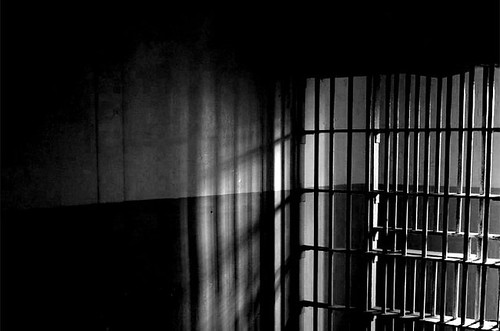
Flint, MI– “Have I been left to die in prison?”
Flint resident Tony Roy wrote this from his prison cell at the Lakeland Correctional Facility in Coldwater, Mich. He’s been there for eight years now, and was given the possibility of early release with parole in August of 2021 on the condition that he complete substance abuse programming.
But since the COVID-19 pandemic began in 2020, the availability of those classes has been on and off. For the last three weeks, it’s been off.
“I served my time. I want to come home,” Roy said. “They stopped the classes, and the government is doing nothing about it.”
According to the Michigan Department of Corrections Public Information Officer Chris Gautz, the programming was paused due to a serious surge in COVID-19 cases.
“Shortly before Christmas, we had a couple hundred positive prisoner cases statewide,” Gautz said. “Today, we have almost 5,000. So the numbers have really exploded. … In order to protect the staff and the prisoners from further spread, we have to pause situations in which we have large groups of individuals in an enclosed space like a classroom right now.”
Gautz said the pause in programming is affecting about 2,000 imprisoned people in Michigan, with about 500 of them currently eligible for release. Of those 500, he said about 250 people are serving time for sex offenses, and must complete intensive and time-consuming programming before being released.
“So it’s not like they would have been released last week but for the pausing,” Gautz said. “So really, it’s about 250 prisoners who are in this category, and even those prisoners, it’s not a guarantee that by completing this class that they would be released. There could be a lot of other factors that the board would look at.”
Gautz said there a variety of classes– substance abuse, domestic violence, sexual offenses against children, among them. Some classes take a few months, and some take longer.
But virtual classes are not an option in the state’s eyes.
“The evidence clearly shows that the way in which these classes are most effective is if they are delivered in person, in a group setting, where there’s an instructor in the room able to lead these classes,” Gautz said. “And are able to hear and see, you know, that the prisoners are taking part, that they’re fully involved, that they’re taking in the information, that they’re participating.”
This means the people relying on these classes for their release just have to wait until COVID-19 “numbers decline.” After two years of a pandemic, Roy said he doesn’t think COVID will ever clear up.
“People want their families home. I’m a grandfather of five. I’ve got jobs set up for once I get out,” Roy said. “I was scheduled to get married on May 4, 2022.”
Gautz said it’s not unexpected that imprisoned people are frustrated by the pause in programming, but that he hopes “they also know that this has been done for their safety, and for the safety of our staff.”
But Roy said the Lakeland Correctional Facility’s safety measures are missing the mark.
“Those who are actually innocent; who were judicially deprived; who are being unconstitutionally detained; and who are repeatedly having their earliest release dates systematically encroached by the Michigan Parole Board, are being compelled to face another Covid-19 outbreak with subpar medical and/or rehabilitation options,” Roy wrote.
He said the quarantine units that people are being housed in are “unequivocally inadequate, deplorably congested, and lacking sanitation and/or waste systems.”
“Our constant fear of death is disquieting and creates a state of despair that is mentally and psychologically captivating!” he wrote.
Support local news!
Flint Beat is here to empower, impact and inform our community. Show your support today!
Choose a monthly amount
Basic
Standard
Pro
Custom Amount
Thank you for your support!
Author