
Flint bars, restaurants hopeful for repeal of Sunday morning alcohol sales ban

Flint, MI — If you’re reading this on a Sunday morning, maybe sipping a mimosa over brunch with friends or having a beer at the bar as the game starts, chances are you aren’t in Flint.
That’s because — as patrons and staff of downtown Flint’s Sauce Italian American Kitchen recently learned — selling alcohol before noon on Sunday is illegal in the city.
“The funny thing is, we did everything else right,” Dan Wright recalled of the Sunday morning the restaurant received a citation for selling alcohol before 12 p.m. He currently serves as Sauce’s food and beverage general manager.
Wright said the team was short-staffed for their usual brunch service, so he was at the bar when a gentleman saddled up to the counter and requested a beer.
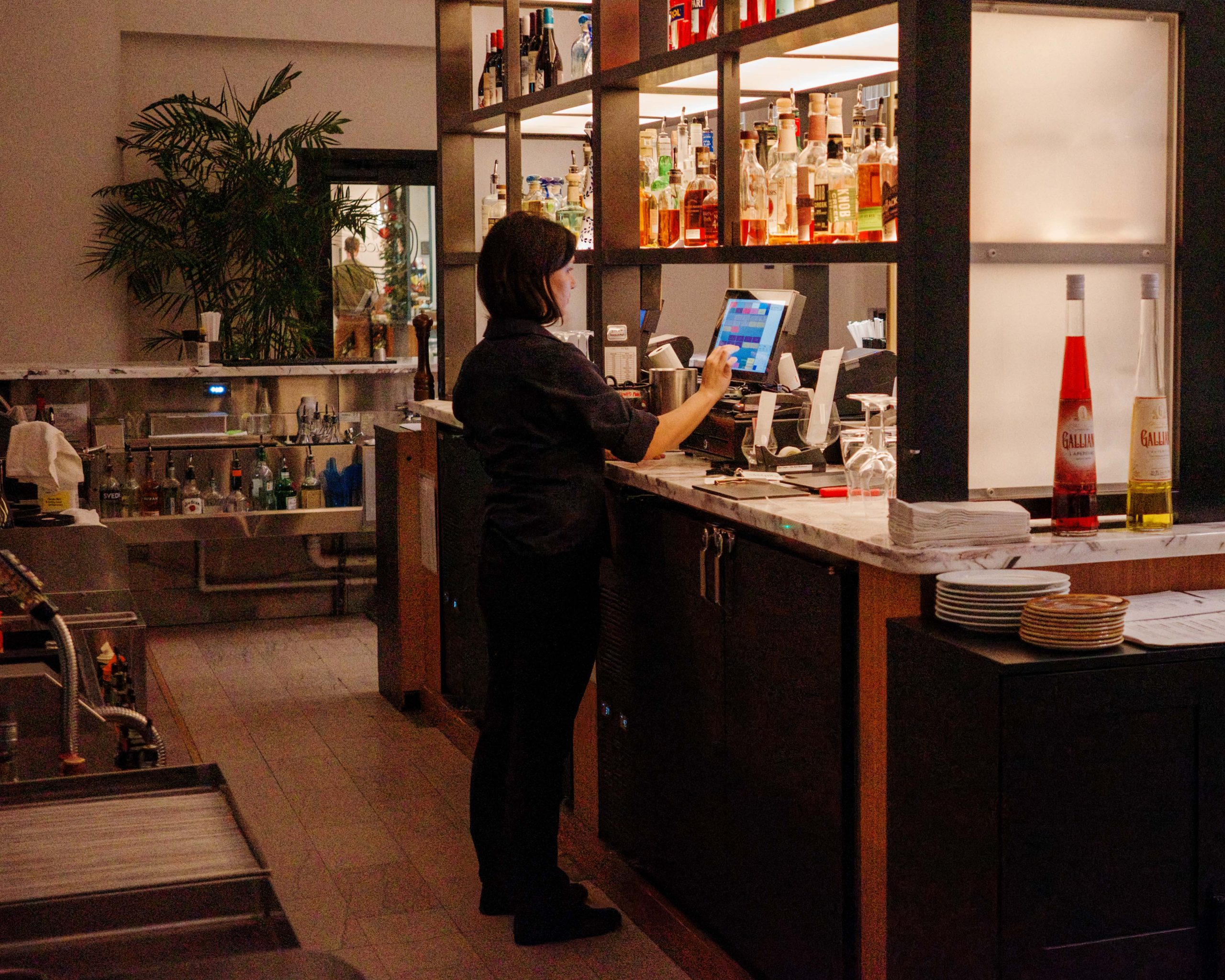
After checking the man’s ID, Wright said he served him the beer, like he’d done for so many other Sauce guests since the hotel the restaurant operates in reopened in late 2020.
“He sat there for a minute and watched to see if I served other people too,” Wright remembered. “I served the table behind him a mimosa, and then he showed me his badge.”
Wright was genuinely surprised when the man — who worked for the state’s liquor control commission — told him that Flint had an ordinance on its books which prohibits any alcohol sales between 7 a.m. and noon on Sundays.
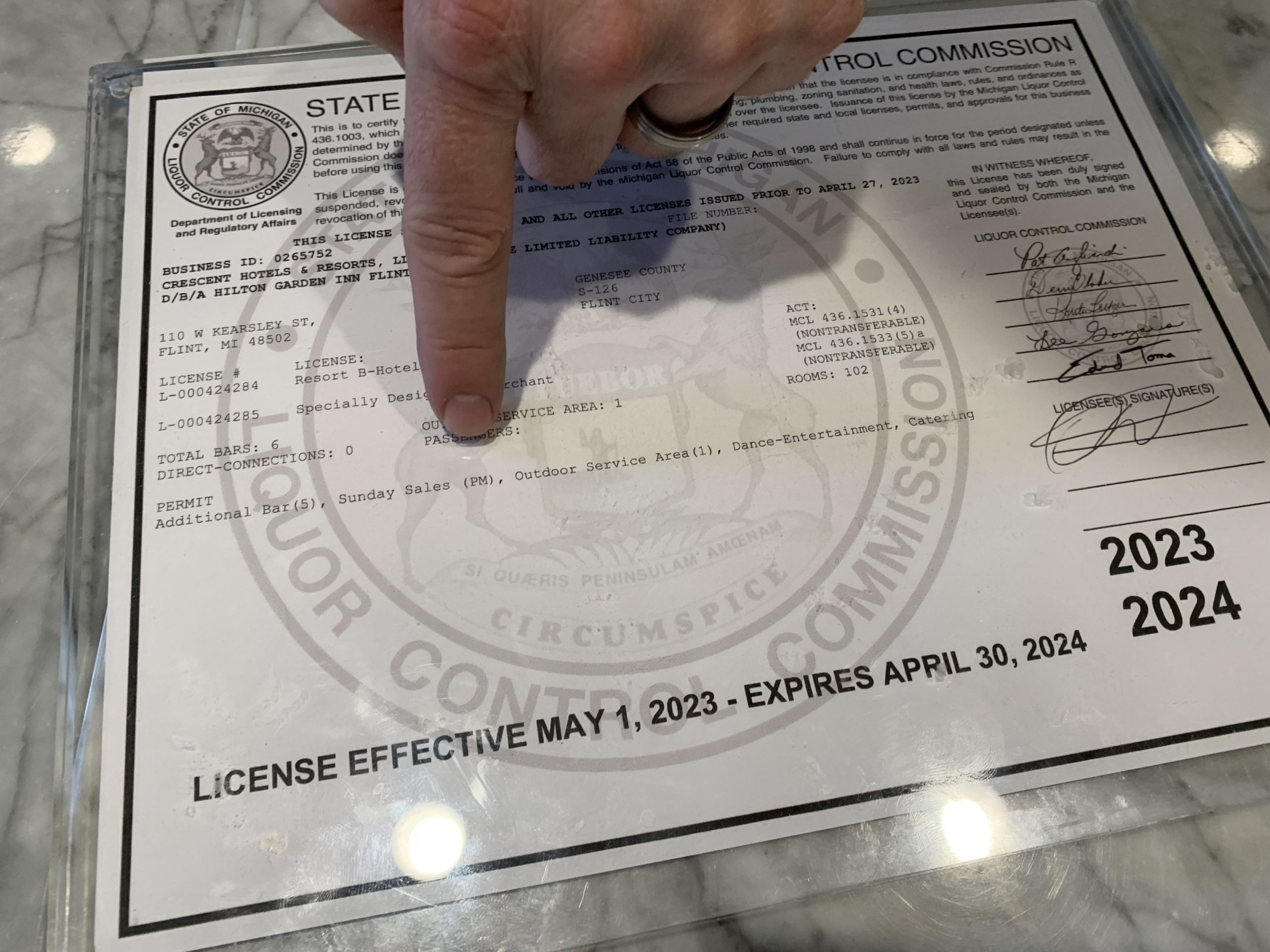
In fact, Wright was so adamant that this could not be the case, he went and grabbed Sauce’s liquor license — which he’s been paying $160 a year for — to show the official.
“That’s when he pointed out the ‘PM’ [next to our Sunday Sales permit],” Wright said. “He was like, ‘You can’t in Flint.’”
Flint opts out
In November 2010, the state of Michigan passed a law allowing for “alcoholic liquor” to be sold at licensed and properly permitted establishments across the state from 7 a.m. to noon unless a local government unit (LGU) chose to opt out by Dec. 15.
By Dec. 13, 2010, Flint City Council voted 6-0 to prohibit liquor sales in that five-hour window.
A local publication summarized then Council President Jackie Poplar’s comments on the matter as: “the city has enough troubles without expanding liquor sales,” and Flint “wouldn’t benefit from allowing the stores to sell on Sunday mornings.”
The same article noted that surrounding municipalities chose to do the same, including Fenton, Linden, Flint Township and Mt. Morris.
But within four years, all but Flint and Mt. Morris had repealed their initial opt-out decision.
Linden and Flint Township both repealed their bans in 2013, and Fenton did in 2014. Now, Mt. Morris and Flint are the only two LGUs in Genesee County with opt-out ordinances still in effect, according to the most recent listing from the Michigan Department of Licensing and Regulatory Affairs (LARA).
The boards and council members who voted in favor of repealing opt-out decisions in Flint’s surrounding cities noted that the Sunday morning sales prohibition had caused local businesses to lose customers to other bars and retailers outside their borders.
“I guess I never realized … how much you lose in food and stuff,” one councilwoman reportedly told a grocery store representative who had come to discuss his store’s estimated lost revenue.
It’s a concern Wright and other downtown Flint restaurateurs are now echoing to Flint’s city council nearly a decade later.
“They’re going to Grand Blanc. They’re going to Fenton,” Marge Murphy, executive chef and owner of Cork on Saginaw, said of would-be Flint brunch customers. “And here’s the thing: any kind of revenue-generating activities down here for the restaurants right now — and there’s not many of us left — one of them is brunch. And that can make the difference between paying your rent or not.”
Murphy went on to note that Cork hosts just one brunch event a month, instead favoring catering and private events as many downtown restaurants are closed on Sundays otherwise.
She wondered aloud how many other bar and restaurant owners had based their weekend hours on the ongoing Sunday sales prohibition, noting that it would be better if multiple spaces were open each Sunday to encourage foot traffic and guests’ confidence that they’ll have a place to go when they visit downtown.
But while Murphy hosts Sunday brunch as a special monthly event, Sauce had been hosting brunch every Sunday before learning of the city’s ban on morning sales.
Wright said the Flint ordinance is not only hurting his staff and the bar’s income, it’s also hurting the hotel they operate in.
“We’re trying to do wedding blocks and things like that,” he explained, referring to a hotel practice of holding a certain number of rooms, or “block,” for special event bookings. “So they want to get together and have brunch or drinks after the wedding? We can’t do that.”
He said he’s sure the hotel is losing event bookings while trying to honor city policy and stay citation-free, but he also feels for his restaurant staff.
“We can see it from day to day, from Saturday to Sunday,” Wright said, clarifying that Sauce offers their brunch menu both days. “But Sunday is historically the big brunch day, and it’s like $1,000 a week [we’re no longer making].”
He said he also cut a morning bartender’s shift and staff have seen Sunday brunch tips decline since they stopped serving alcohol before noon.
What’s next
Since mid-October, Flint City Council has moved a resolution to repeal the city’s Sunday alcohol sales ban between its committee and regular meetings without approval.
In an Oct. 31, 2023 email, Flint Communications Director Caitie O’Neill wrote that this ordinance would help to make Flint businesses more competitive with other businesses in the area.
“The City of Flint initiated the repeal of a resolution internally in the hopes of making Flint businesses more competitive with surrounding communities that do not have the Sunday morning prohibition on alcohol sales,” she wrote.
Most recently, the repeal resolution came before a Nov. 27 council agenda, but was ultimately voted back to the body’s Special Affairs committee despite some council members’ voiced support.
“I think that it’s a sad thing that if my colleagues vote against this … we are sending business to outside our city,” Councilwoman Judy Priestley said, adding that the ban is leaving Flint employers without those sales.
Council President Ladel Lewis said it did not seem like the votes were present to pass the resolution, and Councilwoman Eva Worthing made a motion to send the resolution back to the committee.
“That’s smart because I wasn’t going to vote for it,” Councilman Quincy Murphy responded.
In his reasoning, Murphy harkened back to former Council President Poplar’s rationale for the ban, noting that the repeal wouldn’t just allow for bars and restaurants to sell on Sunday mornings, but also liquor stores.
“Just like y’all got businesses downtown that may love to get their drink on, we’ve got a whole lot of liquor stores on the north end of Flint that really need to be shut down,” he said.

In a follow up interview, Murphy told Flint Beat that he was empathetic to what the bar and restaurant owners were saying and he was even working with Flint’s city attorney to craft an accommodating resolution. However, he was unwavering in his belief that an outright repeal of the Sunday sales ban would be harmful to his community.
“Where I come from, the area that I represent, is a predominantly poor, minority community that has nothing on every other corner but liquor stores,” Murphy said.
He described historic issues and high rates of alcoholism in his neighborhood, saying that he felt that liquor stores had “destroyed” his community.
“People not even going to get help, they don’t believe they have a drinking problem,” he said. “You change it to that [ordinance repeal], and they’ll be at the liquor stores. I mean, I’m trying to do preventative measures. I’m trying to prevent that.”
While council continues to consider the repeal resolution, Flint Beat reached out to LARA (Licensing and Regulatory Affairs) to ask what happens should the body vote in favor of repealing the ban.
“When/if the council repeals its prohibition and the documentation is received by our office, the Liquor Control Commission will update its records online and begin accepting applications from qualifying licensees at that time,” Jeannie Vogel, a public information officer with the Michigan Liquor Control Commission wrote to Flint Beat.
Vogel noted that the cost for such a permit is $160 per year, but a licensee would not need to wait to apply for that permit with their normal liquor license renewal in May. Instead, they could send the application in immediately.
Further, she wrote, the Liquor Control Commission can usually “process permit applications within a few weeks” if the licensee submits their complete application in a timely manner and provides prompt payment.
“It feels like an archaic, silly thing from 15 years ago,” Wright said of the ongoing Sunday sales ban, sitting at a table in Sauce’s dining room in mid-November.
He looked around the restaurant, a former bank with towering ceilings, art deco finishes, and teal, mauve, and gold furnishings against white walls and marble countertops.
“And this is where Flint’s at now,” he said. “We’re not where we were 15 years ago.”
Council will again consider the resolution to repeal the city’s Sunday morning alcohol sales ban at its Special Affairs meeting on Dec. 11. That meeting will be held at 4:30 p.m. in Council Chambers at Flint City Hall.
Support local news!
Flint Beat is here to empower, impact and inform our community. Show your support today!
Choose a monthly amount
Basic
Standard
Pro
Custom Amount
Thank you for your support!
Authors